Monday, May 6, 2013

Puma Patrol


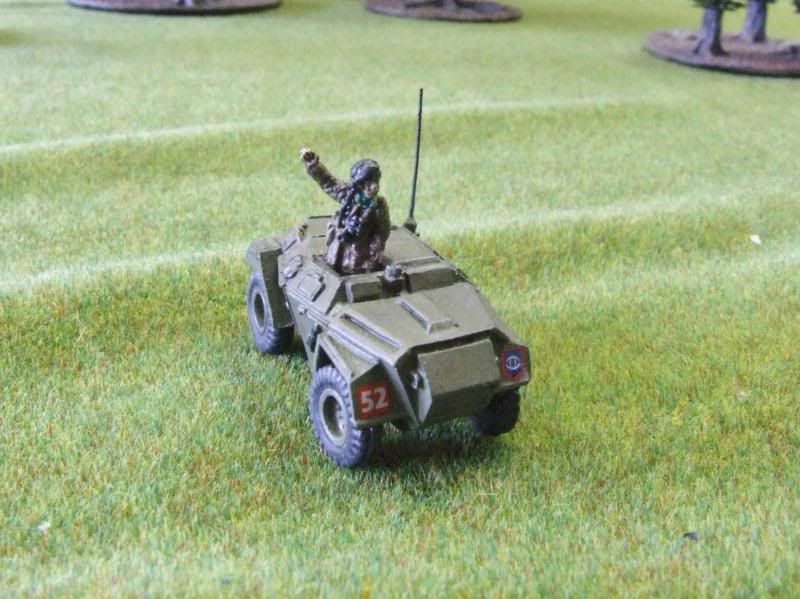
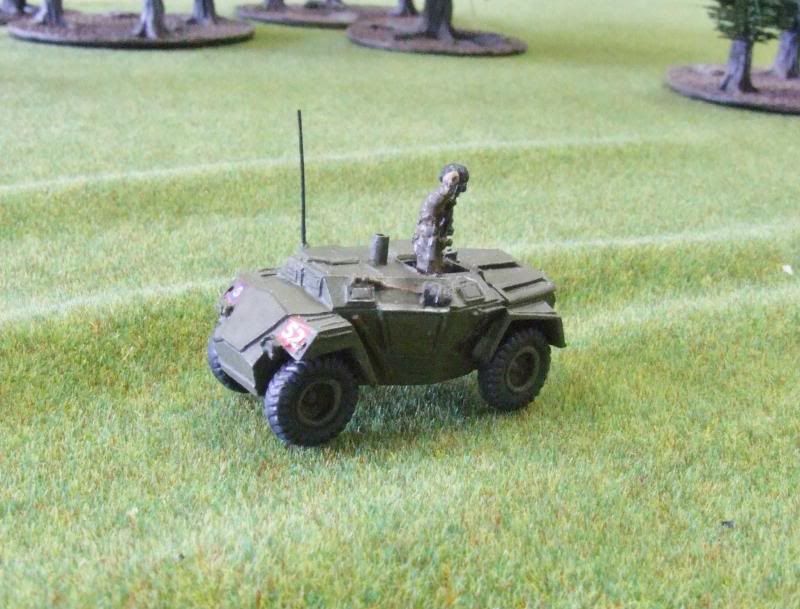
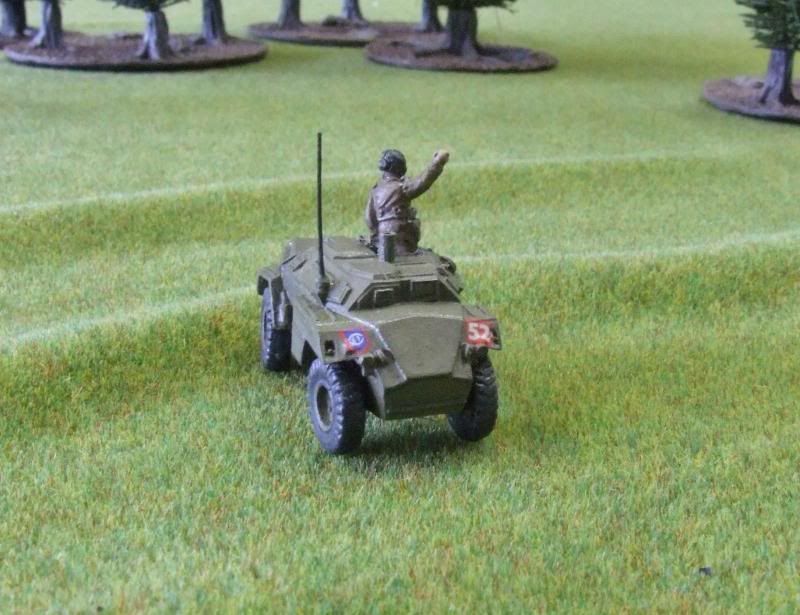
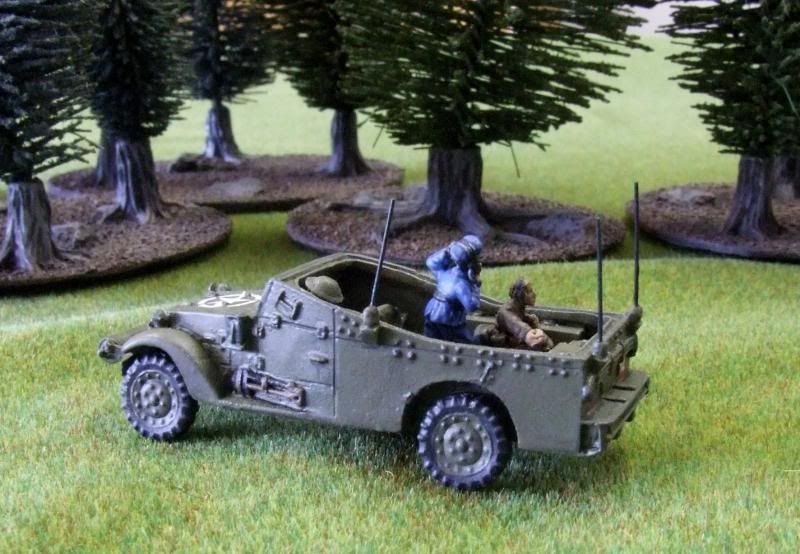
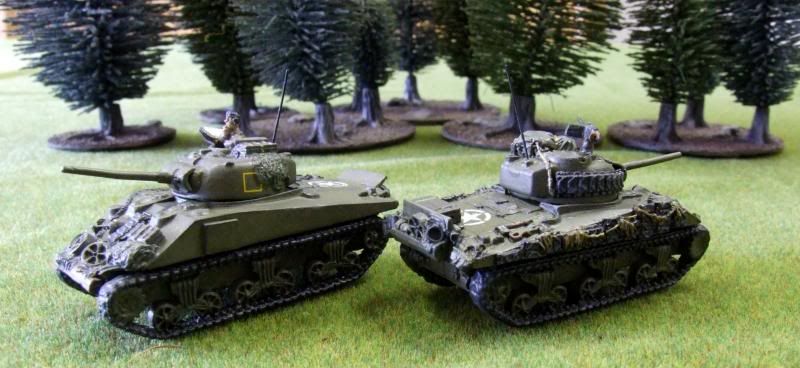
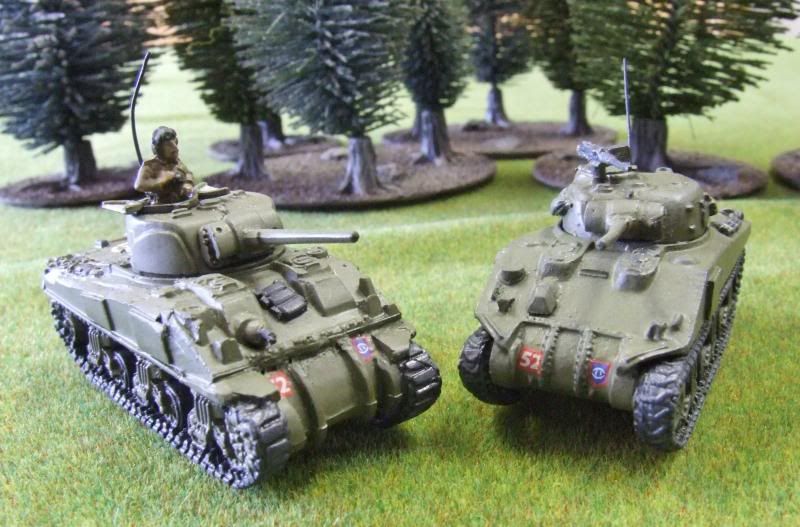
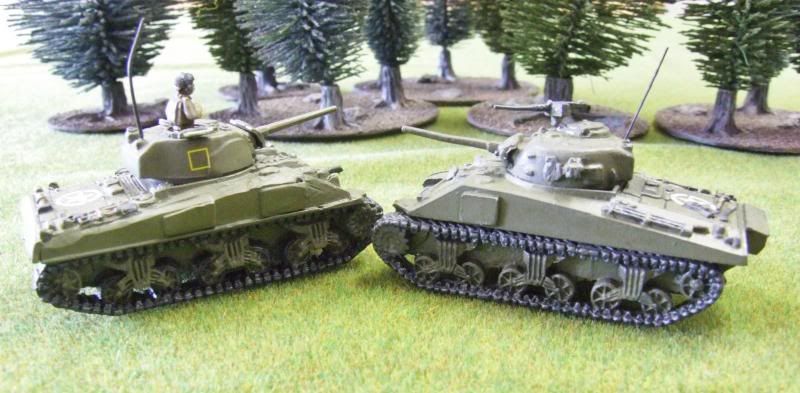
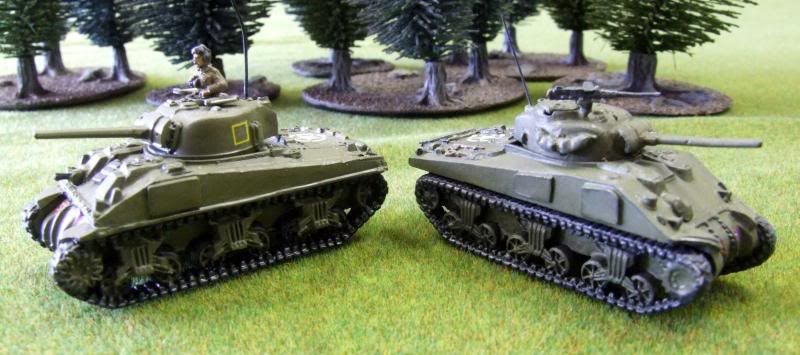
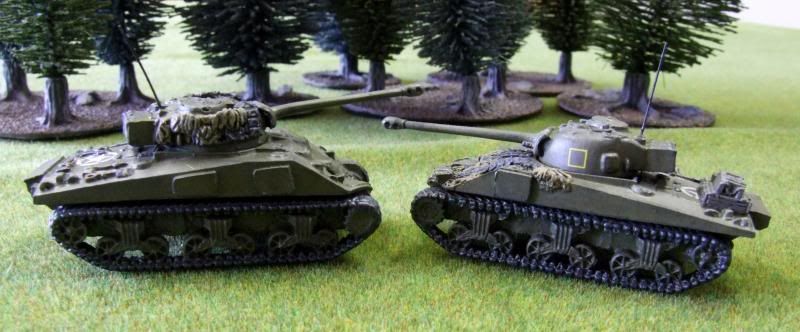
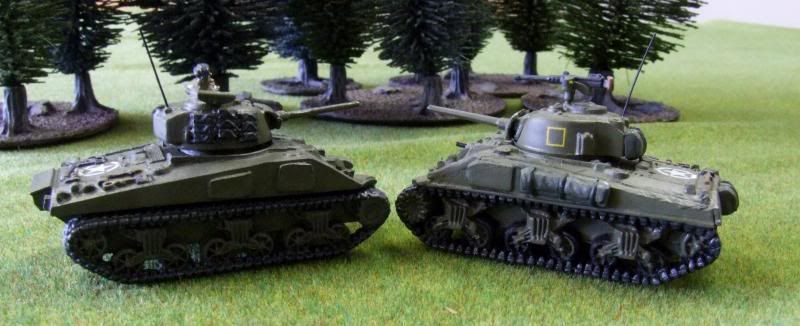
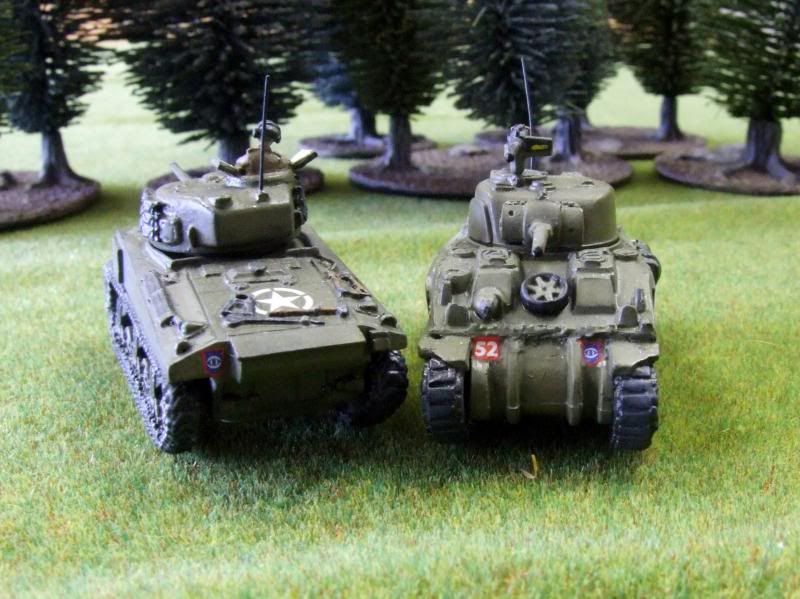
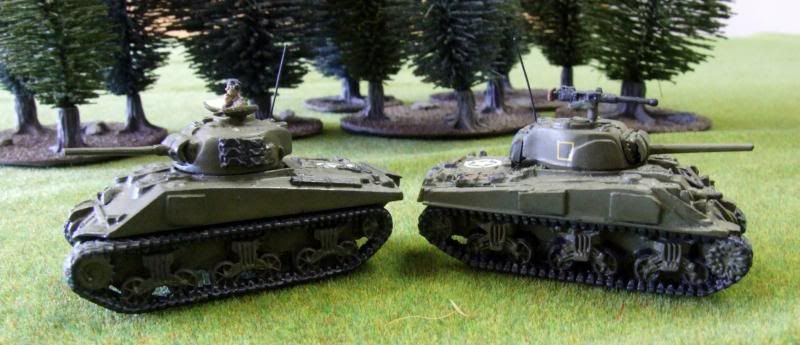
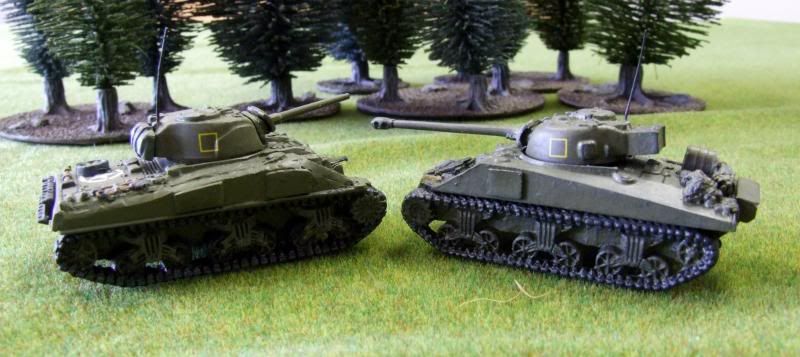
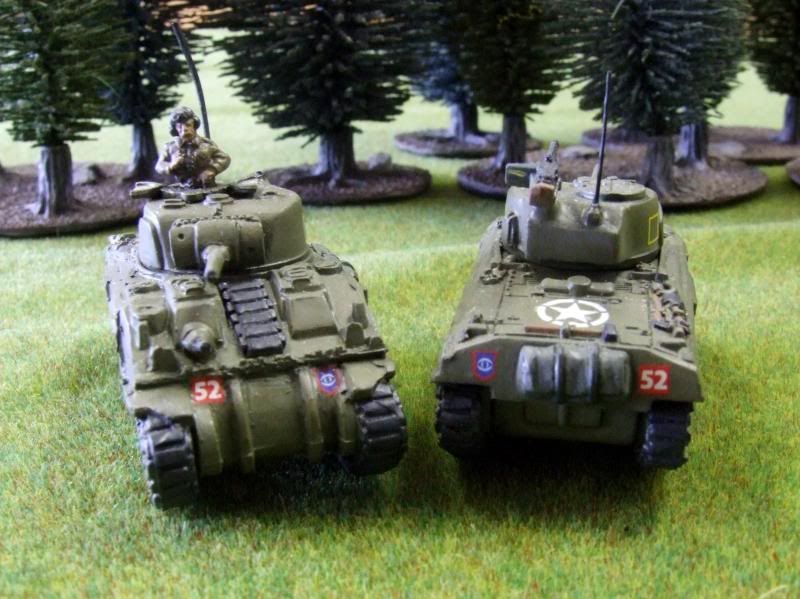
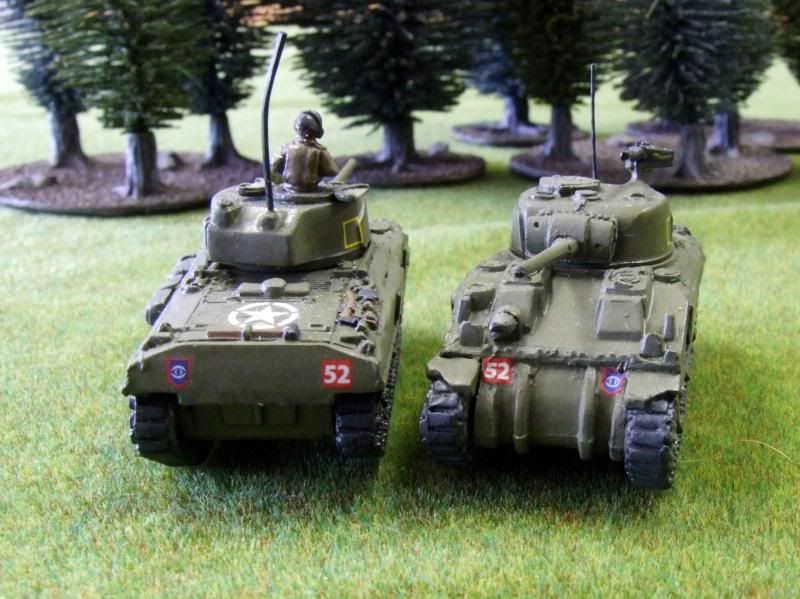
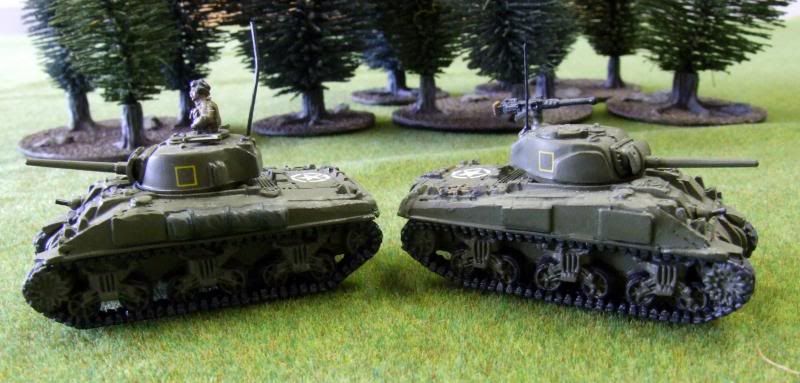
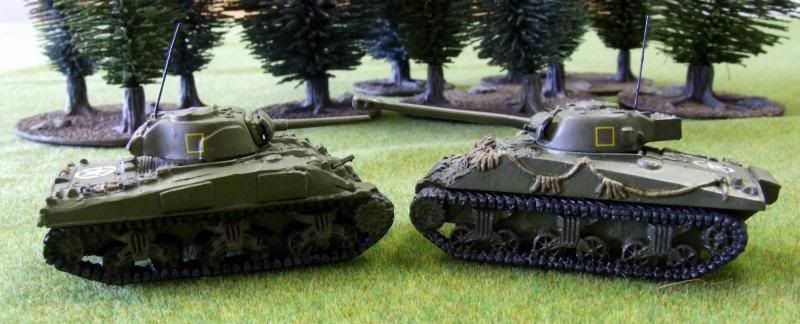
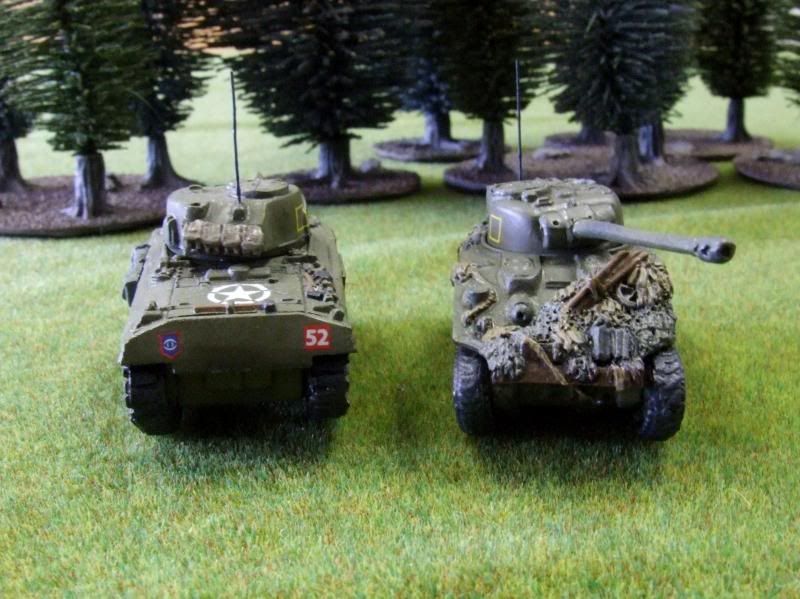
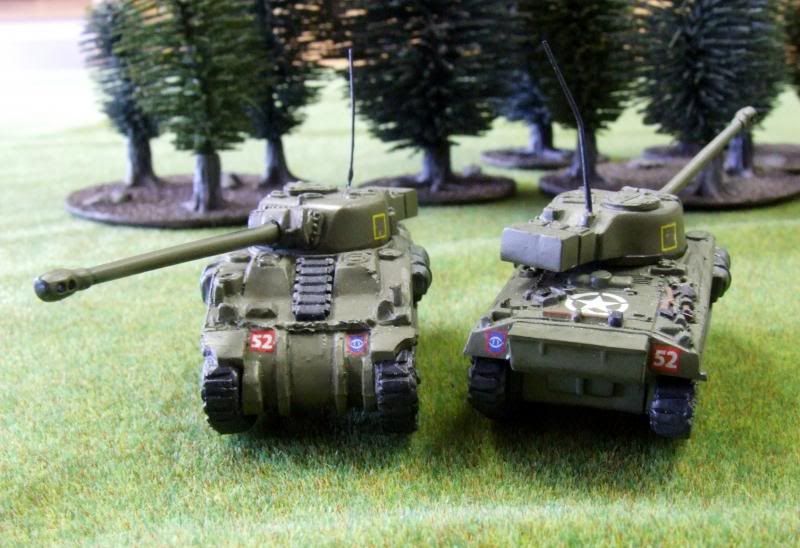
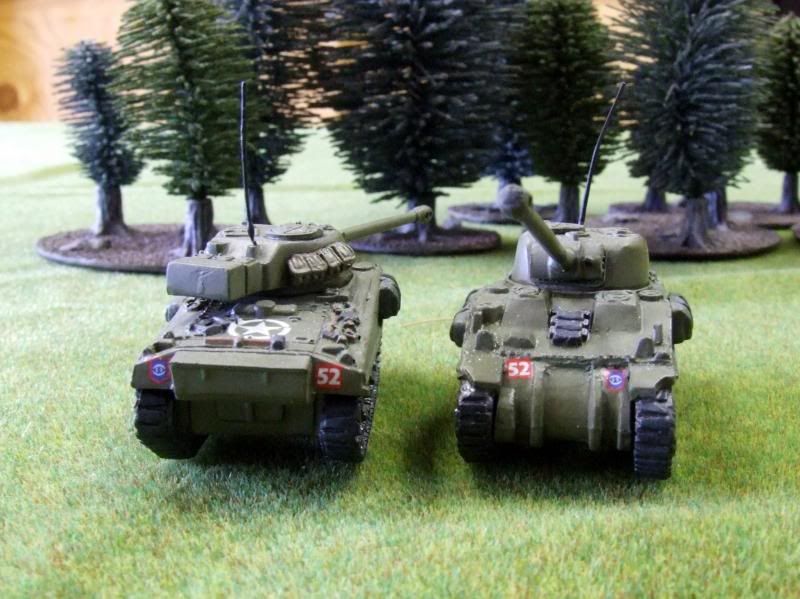
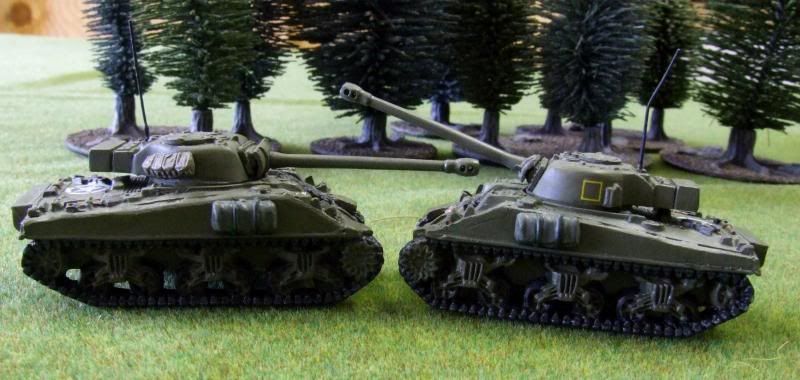
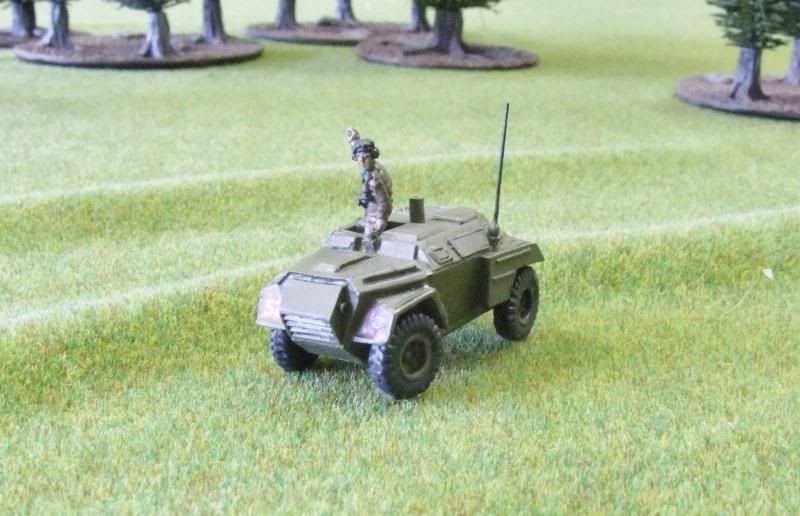
I have 13 of these bad boys, but only 3 fully painted.  The rest all have their basecoat and camo applied...just have to apply the finishing touches.  These 3 however were the lucky winners and were part of my list in the tournament last March....so I had to get these guys D-O-N-E!

I get them all finished and looking purty....only to leave them at home and bring instead 3 of the half painted models.

I know...I know

So its long past time for these guys to burst upon the world in all their glory.

Puma #1


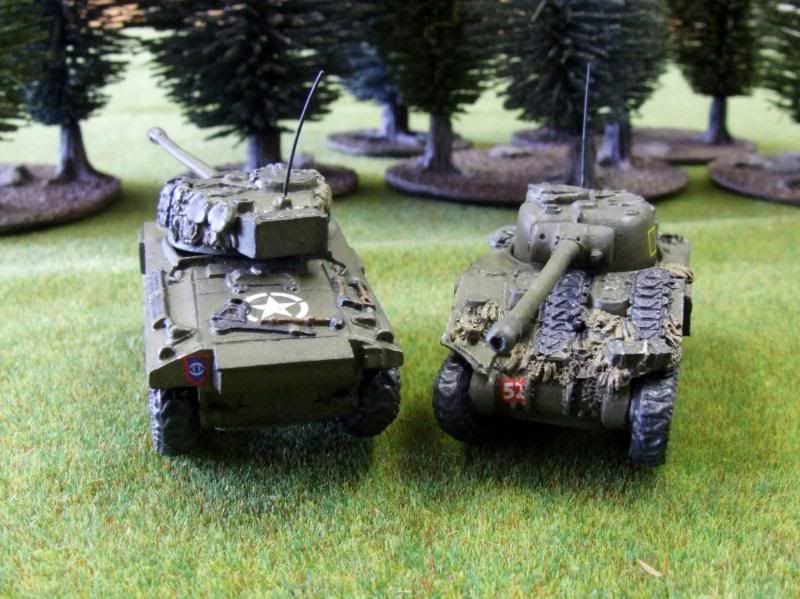
Puma #2:


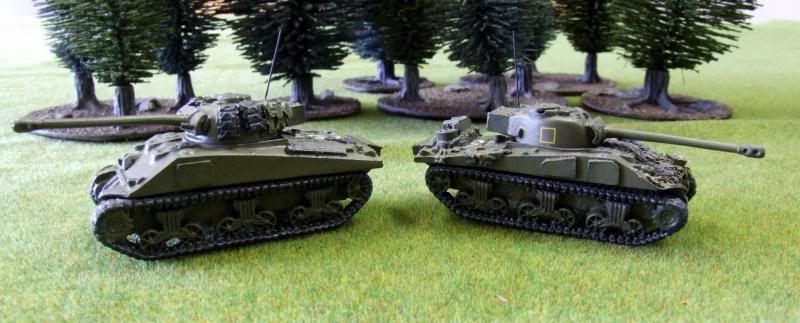
Puma #3:


I used the same techniques and colors as I did with the armored AA halftracks. The vehicles were all airbrushed with Vallejo Middlestone (882) as a base color and then stripes of German Camo Medium Brown (826) and Reflective Green (890) were added. I was using my single action airbrush and the stripes were a LITTLE thick, so I had to thin them out by stippling the edges with Middlestone.

The tires were basecoated 950 black and then lighter colors built up with drybrushing ....first   862 Black Grey 836 London Grey then finally 870 Medium Sea Grey.

The fuel cans are 830 German Field Grey as basecoat, 979 German Camo Dark Green as a 1:8 wash and then a mix of 830 German Feldgrau and 886 Green Grey at 1:5 as a hi lite.  On one Puma I added an extra can I had left over in my bit bucket.

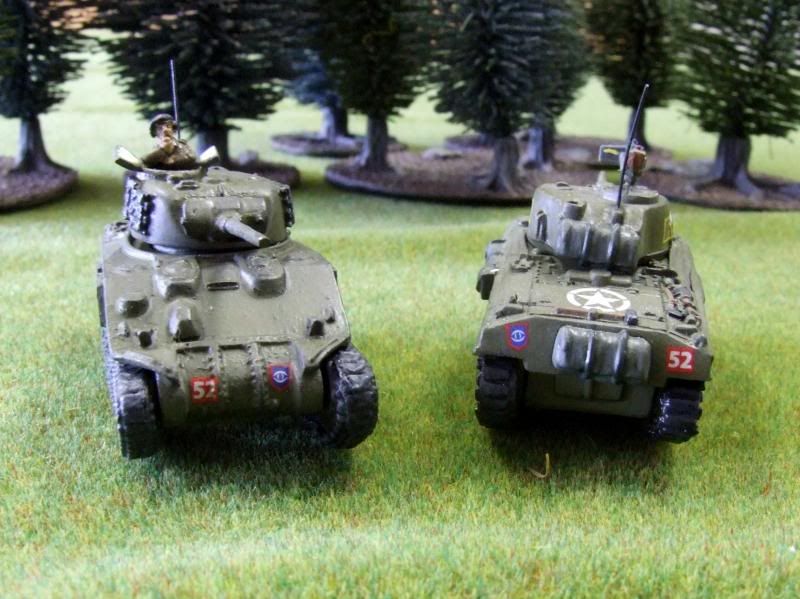
The number decals on the turret were homemade using Testors decal paper.  I couldn't get a nice single number from the Testors sheets to go on the door behind each front wheel.  So I ended up hand painting those.

They are A LOT of fun to play with just one patrol of 3 Pumas....excited to try 13 of them on the field at once.  Maybe..one day...I can try full the full Monty of 19 Pumas!

Tuesday, April 23, 2013

German 20mm AA Armored Halftrack Platoon


As I mentioned in the last blog post, we had a 2000 pt Flames of War Late War tournament in Mid March and I was going to run Germans...and that I was undecided as to which list I was going to run.  I was split between Quad 20mm Armored halftracks or the single 20mm armored halftrack.  Well, this week I get to share the option I did not choose...the 20mm AA Armored halftrack platoon.

These too are Battlefront models and again I love how they look.  They had very little flash on the vehicle and crew to deal.  Assembling the guns was much easier (as their is only one and not 4 as in the Quad 20mm); but I did have an issue with one of the tracks on one of the vehicles.  It wasn't really a miscast, just all the flash that wasn't on the other figures was on this one track.  Easily overcome though.

1st Gun Section


2nd Gun Section


3rd Gun Section


The standing gun crew members were pinned in place with a little piece of piano wire drilled in one of their feet.

I used the same techniques and colors as I did with the Quad 20mm tracks.  The vehicles were all airbrushed with Vallejo Middlestone (882) as a base color and then stripes of German Camo Medium Brown (826) and Reflective Green (890) were added. I was using my single action airbrush and the stripes were a LITTLE thick, so I had to thin them out by stippling the edges with Middlestone.

The tracks were basecoated in Vallejo Black (950) and then heavy dry brushed in Cavalry Brown (982) with a final highlight of Gunmetal Grey (863) and a #2 pencil.

Even though I didn't use these in the actual tournament, I did use them in a few warm up games prior and they were effective for the points, but I had enough points in my list and could afford the Quads for the tournament...so they won out.

Wednesday, April 3, 2013

German Armored Quad 20mm Anticraft Guns


We had a 2000 pt Flames of War Late War tournament in Mid March and I was going to run Germans...but  had a load of painting I had to get done to be able to field a good force.  Add to that I was undecided as to which list I was going to run...so I had to paint several extra units to be covered...just in case.

One thing I knew I needed regardless of the list was a good platoon of Anti-craft guns.  I already had the Armored Quad 20mm tracks in the painting cue, but hadn't gotten around to them yet.  Well their number got called and they moved up the ranks.

These are Battlefront models and I love how they look.  I had very little flash on the vehicle and crew to deal with.  Putting them together was a bit of a challenge though.  The guns and gun shield were uncooperative at times...but they finally saw who was boss and relented  ;-)

Gun 1


Gun 2


Gun 3


The vehicles were all airbrushed with Vallejo Middlestone (882) as a base color and then stripes of German Camo Medium Brown (826) and Reflective Green (890) were added.  I was using my single action airbrush and the stripes were a LITTLE thick, so I had to thin them out by stippling the edges with Middlestone.

The tracks were basecoated in Vallejo Black (950) and then heavy dry brushed in Cavalry Brown (982) with a final highlight of Gunmetal Grey (863) and a #2 pencil.

The crew were painted using my paint plan for SS Wikings posted under my Painting Plans post.  I went with the plan Feldgrau look as opposed to any camo as the figures didn't have camo smocks.

I did do a head swap for the gunner on Gun #3 to add a little variety to the unit.

They did well in the tournament knocking down a few enemy planes in the process


Tuesday, April 2, 2013

Slacking

I realize that I have been slacking on updating the blog...I blame the WWPD guys getting people into the Online game "Eve"

I mean Scordite cant mine itself right?  Right?!?!?!?!

AHHHHHHHHHHHHHH!!!!!!!!!!

But rest assured...I haven't stopped painting or anything.  I have still been painting as always...just my online time was consumed with Eve.

Over the next few months I will be posting up what I have been working on as well as some units I realized I hadn't posted before.

I will also start a thread on my thoughts as I work on making a Market Garden Campaign for my local group.

And my World War 2 focus will expand to include Battlefront's latest release Tour of Duty which covers Vietnam.  Suffice it to say they got Nam right this go around.  The games are a blast...and I am playing the NVA!!!  It is very cinematic...think "We were Soldiers Once, and Young..." but on the tabletop.

More of the good stuff in a week or so.  Thanks for sticking with me

Friday, February 8, 2013

Treelines


As part of the preparation for the Frontal Assault Tournment in Huntsville, Alabama on 16 Feb 13, I had to make 24 feet of treelines. Not to self...when designing tables be aware of what you are signing up for if you have to buy/make terrain.

To steal a line from Oddball from Kelly's Heroes as he was trying ot get some bridging support....."24 feet of treeline...I can get that anywhere."

Well, reality hit me.  24 feet of treeline...how to do this.

Well, to give a little flexibility it would be nice to have 6 inch long sections. 

Now I have to build at least 48 sections to meet the requirement.  GULP!!!!

First it would be nice to know what treelines actually look like.  In Europe, you find these along many roads and rivers:

http://www.f1online.de/premid/002073000/2073047.jpg

Ok, so we have tall skinny trees in a line.  Having a stick with clump foilage stuck to it and trimmed to shape  would work.  Now I am cheap...what is about the cheapest stick you can find?

Q-tips is what I came up with...and I only needed part of a $3 box!  I used the cardboard stick ones, not the plastic ones.  I found the plastic ones too flimsy.  you would be surprised at how strong theses paper sticks are.  Just cut the ends with cotton off of both ends and keep the middle piece.  Peel off as much of the cotton that might still be on the stick as you can.

Now we need a base for the trees to sit.  I had some Basswood and Birch boards laying around from another project. I then cut them into 6 in x 1 in lengths.  I ended up with 52 bases.  Always good to have a few extra.  The birch wood is thinner and looks better IMHO.

Next, I used hot glue to affix the sticks to the bases.  4 sticks per base, evenly spaced gives a nice impression of the treelines in the picture above. The little mound of glue at the bottom might look a little wierd right now, but wait till it gets painted.


Next step is to begin to landscape the base.  You could use pumice, but that is too expensive.  Sand or Woodland Scenics Ballast is a good solution.  Glue the sand/ballast down and once dry paint the base and trees a good dark brown.


Next hi-light the dirt with a lighter brown. Finally add the flock and build up the grassy areas. 


Get your wife to help if you can...

 
Next is to turn those sticks into trees.  This is simple...glue clump foilage to the sticks and once dry trim to ge the tall skinny tree look.  I used hot glue to stick the big pieces and then foam safe super glue for smaller pieces.

Add a few bushes inbetween the trees for flavor.


The last step is to seal the clump foilage with Matte medium...or a cheaper alternative of watered down Elmer's Glue (PVA Glue).  I have heard that Elmer's will yellow over time (several years maybe), so keep that in mind.  If you only plan on these lasting a few years, then Elmer's is a cost savings alternative.

The end result  26 feet of treeline!!!!


So what did it cost for 26 feet of Treeline:

Birch board (24"x12"x1/8"):  $7
Basswood (36"x3"x1/8"): $3
Foam Safe Super Glue:  $12
Elmers Glue:  $3
Clump Foilage (5 bags)  $9 ea
Woodland Scenics Ballast Grey Fine:  $13
Hot glue sticks:  $10
Craft Paint:  $6
Q-tips:  $3
Total: $102

If I used Matte Medium the total would be $109

Woodland Scenic Matte Medium 16 oz (Prepared):  $4.98 (would have needed 2-3
bottles)

I didnt use up all the Ballast, Super glue, hot glue sticks, or paint.  Only the ballast would last through 1, maybe 2 more, sets fo 26 feet of treeline.

And it took roughly a 2 weeks to make everything if you include the drying time of teh matte medium/Elmer's glue.  A worthwhile investment for some cool terrain to add to teh table.

Tuesday, January 8, 2013

Building Buildings for 15mm Games on the Cheap


As part of the prep for the Flames of War tournament we are having in Huntsville, Alabama on 16 Feb 13 I we had to either make or buy 6 Italian style buildings and 3 stone bridges.  If we were to buy that for say $25 for 2 buildings and at least $10 per stone bridge we would be talking at least $100 we would have to spend....in addition to the other items on our "Make or Buy" list. 

A buddy of mine who is new to Flames of War just happened to show me some buildings he made for his Napoleonics game using Mat board (the stiff board used in frame that gives you a colored "inner" frame within the frame).  These were pretty slick.  Then it got me thinking...Maybe I could do that for these Italian buildings and bridges.

So what would I need:

- A Plan
- Matboard
- SHARP Hobby Knife
- Hot glue gun and glue sticks
- Waterproof Micron pens
- Paint in various colors
- Superglue (Zap-A-Gap)

I had pretty much all of these supplies on hand except for a a few certain paint colors I was able to make 8 buildings and 4 bridges for under $10 and about 3 weeks of my time (off and on a few hours a day).  If you have to buy a 32"x40" matboard you can find these for under $10....so 8 Buildings, 4 Bridges for 20% of the price!

Plan:

You need to do a little research if you don't want to do a standard square house.

I based my Italian houses of off some JR Miniatures houses and some real life street scenes I found on the Internet.


Then you break the house into floors and each floor into the sides.  In the picture above if you look at the level that is on the upper right corner of the concept picture you will see the sides that come into a point to support the roof.

As you make your plan, make sure you include the dimensions for the figures that will fit inside.  For these, I planned to have 2 medium sized Infantry Bases to fit into each level.


Once you have the base side down, cut out the pieces the you need and do a "semi- dry fit" where you use tape to hold the pieces together.

If all is well, take the pieces apart and use these as templates for the rest of the pieces you will need.

Special note on the roofs...The "Triangle" roof is the simplest.  It is just 2 pieces slightly longer and wider than the floor. I just eyeballed the slope so I didn't have TOO much of the roof overhanging the sides of the building.  When you cut the supports they ....  Glue them into place close to the ends, but not at the edge.  They need to be just inside the wall to help prevent the roof from sliding off side to side.


The "Square" roof is a little trickier. The Square Roofs fit on a flat square section, whereas the Triangle Roofs need the end piece of the floor level to be pointed.  Cut out the sections and when you assemble them start with the trapezoid (long) sections first and then glue the triangle end pieces on.  When you glue the end pieces, line the piece up so the base is level with the edge of the long sections.  You most likely will have "overlap" along the edges to the top point, but don't worry you can just trim that up with your hobby knife. Then glue to supports along the center seam.


The last step is to cut a square a little smaller in width and length than the floor section and glue this in the center of each level, except the ground level.  These help keep the upper levels from sliding foo the lower level.


Bridges are similar.  You have the 2 sides, an upper road section, and 2 ramp sections.  When you construct the bridge start by tacking (using just a little glue) the upper road section on to one of the side sections and then glue the end ramps.  It takes a little fiddling to make sure everything lives up level and straight.  The last step is to glue on the other side section so it is level.  Since you tacked the pieces in place, you can slide them around a little.  Once all is in place, lay a nice solid bead of super glue along the seams to hold it all in place.
 
 
The next step is to lay a bead of hot glue along the edges and seams.  On the roofs, this will be the capping level of tiles on the tile roof and for the building levels and bridges it is the decorative brick/stone edging.
 
Next is to paint in whatever you color scheme you have chosen, to include any shading and highlighting. You also paint in all the windows and decorative art (window boxes, flowers, etc...).  And don't forget to paint the inside...floors, windows, doors, etc... This helps make it readily apparent where the openings are just by looking at the inside.
 
A word on openings.  In Flames of War, units can only attack and be attacked through an opening.  Most buildings for sale have openings on all sides.  I built these intentionally to have some levels that did not have openings (windows) on the ends.  This creates a few tactical challenges for the player now...which could be overcome by using the "Loopholes" rule on page 108 in the V3 Rulebook.  This allows a player in the building to to make a Skill Check (just like "Digging In") and allows that team to be able to shoot (and be shot) through all sides it is adjacent to as long as that team is there.  It can not be assaulted through the loophole. Now, just think of the tactical challenges this present to the attacker and defender!
 
The final step is the most time consuming...using the Waterproof Micron pens to make draw in the tiles, bricks, stones, cobblestones.  Waterproof pen is vital.  If you don't use one, a drop of water could cause the ink to run.  I made this mistake and didn't discover it until I was about 25% done.  :-(
 
After the Micron pen work is dos finished you are technically done.  You could add propaganda posters if you wish and if you used Waterproof pens you could matte varnish your work to protect it.


That's all there is to it.  I am going to try and build a larger "L" shaped building and another with an arch next,  Will keep you posted!